NSFAS Late Application Status Check (2026 Guide)

Missing the main NSFAS application deadline can feel overwhelming, especially when you depend on financial aid to continue your studies. The good news is that a late application window may give eligible students another opportunity to apply. Once you’ve submitted your application, the next challenge is waiting for updates and understanding what your application status actually means.
This complete guide explains everything you need to know about the NSFAS Late Application Status Check process. You’ll learn how to track your application, understand every status message, solve common problems, prepare the correct documents, and know what to do if your application is rejected. Whether you’re applying for the first time or checking your progress after a late submission, this guide will help you stay informed and avoid unnecessary mistakes.
What Is an NSFAS Late Application?
An NSFAS late application is a special opportunity offered after the normal application period closes. It allows eligible students who missed the original deadline to apply for financial assistance. However, late applications are only accepted if NSFAS officially opens a late application window.
Unlike regular applications, late submissions usually receive additional verification. NSFAS carefully reviews the reason for the late application, checks supporting documents, and confirms that funding is still available. Because of these extra checks, processing often takes longer than standard applications.
Applying late does not automatically mean your application will be rejected. If you meet all the eligibility requirements, submit complete documents, and provide a valid reason where required, you still have a chance of receiving funding.
Is NSFAS Open for Late Applications in 2026?
For the 2026 academic year, NSFAS has announced a dedicated late application period instead of accepting late submissions throughout the year. Students should only apply during the official window published by NSFAS.
Be careful of fake websites and social media posts claiming that applications are permanently open. NSFAS never asks students to submit personal information through unofficial links or pay application fees. Always use the official myNSFAS portal when applying or checking your application status.
Who Qualifies for a Late NSFAS Application?
Not every student can submit a late application. You must still meet the standard NSFAS eligibility requirements while also qualifying during the late application period.
Generally, applicants should:
- Be a South African citizen.
- Be accepted or registered at a public university or TVET college.
- Have a household income of R350,000 or less per year, or R600,000 for students living with disabilities.
- Not already be fully funded by NSFAS for 2026.
Some late applications may also require proof explaining why the application was not submitted during the normal application period. Valid reasons can include medical emergencies, serious family circumstances, or technical system issues that prevented submission.

Documents Required for a Late Application
Preparing your documents before starting the application makes the process much easier. Missing or unclear documents are one of the biggest reasons applications are delayed.
You may need:
- Certified South African ID or birth certificate
- Parent or guardian ID documents
- Household income proof
- Academic acceptance or registration letter
- Affidavit explaining the late submission
- Medical records or death certificate (if applicable)
- Disability Annexure A (for students with disabilities)
All supporting documents should be certified within the previous three months. Clear PDF or JPG files are usually accepted, provided they meet the portal’s file size requirements.
How to Submit an NSFAS Late Application?
Submitting a late application follows almost the same process as a standard NSFAS application. The difference is that you’ll need to choose the late application option if it is available.
Follow these steps:
- Visit the official myNSFAS portal.
- Log in or create an account.
- Select Late Application 2026 if available.
- Complete your personal and academic information.
- Upload all required supporting documents.
- Review every section carefully.
- Submit your application before the closing date.
Take your time when completing each section. Even small mistakes, such as entering an incorrect ID number or uploading the wrong document, can delay processing.
How to Complete an NSFAS Late Application Status Check?
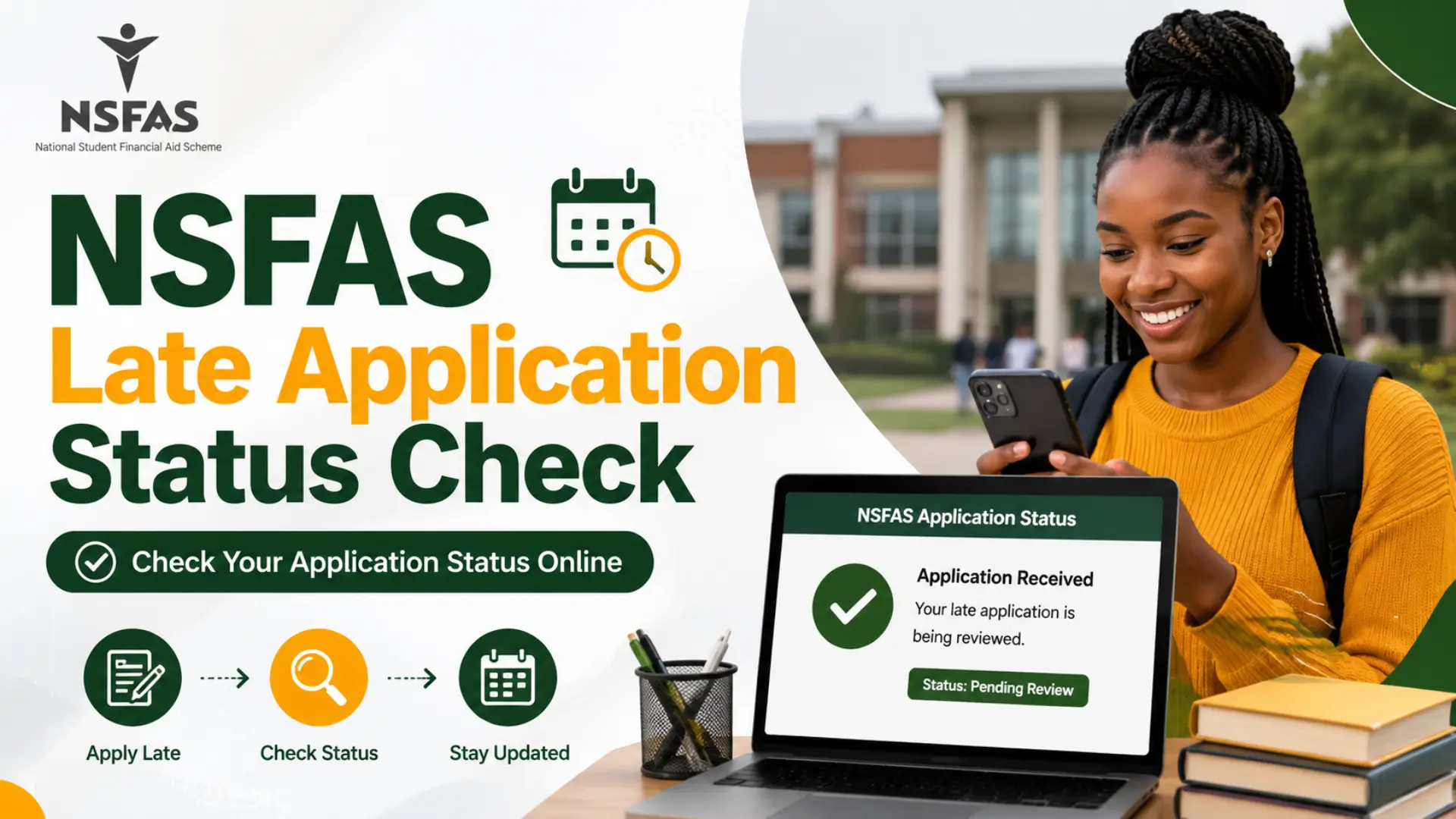
After submitting your application, you should regularly perform an NSFAS Late Application Status Check to monitor your progress.
The easiest method is through the myNSFAS portal:
- Visit the official NSFAS website.
- Log in to your myNSFAS account.
- Open Application Status.
- View your latest status update.
If your application does not immediately display a status, don’t panic. Late applications usually take longer to appear because they are processed after many on-time applications have already entered the review system.
Some students also use NSFAS communication channels such as SMS notifications, USSD services, or official support lines to receive updates when available.
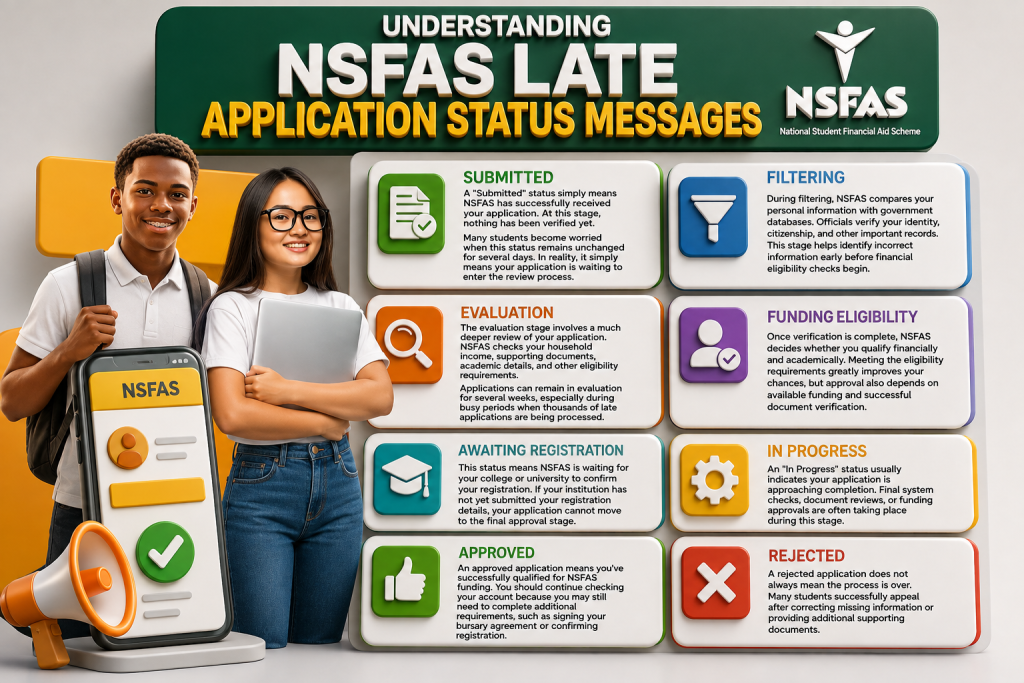
Understanding NSFAS Late Application Status Messages
Submitted
A “Submitted” status simply means NSFAS has successfully received your application. At this stage, nothing has been verified yet.
Many students become worried when this status remains unchanged for several days. In reality, it simply means your application is waiting to enter the review process.
Filtering
During filtering, NSFAS compares your personal information with government databases. Officials verify your identity, citizenship, and other important records. This stage helps identify incorrect information early before financial eligibility checks begin.
Evaluation
The evaluation stage involves a much deeper review of your application. NSFAS checks your household income, supporting documents, academic details, and other eligibility requirements.
Applications can remain in evaluation for several weeks, especially during busy periods when thousands of late applications are being processed.
Funding Eligibility
Once verification is complete, NSFAS decides whether you qualify financially and academically. Meeting the eligibility requirements greatly improves your chances, but approval also depends on available funding and successful document verification.
Awaiting Registration
This status means NSFAS is waiting for your college or university to confirm your registration. If your institution has not yet submitted your registration details, your application cannot move to the final approval stage.
In Progress
An “In Progress” status usually indicates your application is approaching completion. Final system checks, document reviews, or funding approvals are often taking place during this stage.
Approved
An approved application means you’ve successfully qualified for NSFAS funding. You should continue checking your account because you may still need to complete additional requirements, such as signing your bursary agreement or confirming registration.
Rejected
A rejected application does not always mean the process is over. Many students successfully appeal after correcting missing information or providing additional supporting documents.
What to Do If Your Status Does Not Change
Waiting for updates can be frustrating, especially when your status remains unchanged for weeks.
Before contacting NSFAS, try these simple checks:
- Log out and sign back into your account.
- Refresh your browser.
- Confirm every required document uploaded successfully.
- Check your email for requests from NSFAS.
- Verify your phone number and email address are still correct.
Remember that January, February, August, and September are among the busiest processing periods. Delays are often caused by high application volumes rather than problems with your application. If several weeks pass without any progress, contact NSFAS using their official support channels for assistance.
Common Reasons Late Applications Are Rejected
Late applications face additional challenges compared to applications submitted during the normal window.
Some common rejection reasons include:
- Missing required documents.
- Incorrect personal information.
- Household income exceeding NSFAS limits.
- Invalid reason for applying late.
- Applying after the official closing date.
- Registration not confirmed by the institution.
- Poor-quality document uploads.
Applying late alone does not automatically result in rejection. Most unsuccessful applications are rejected because they fail one or more eligibility or documentation requirements.
How to Fix Problems With Your Application?
Many application problems can be corrected before NSFAS makes a final decision.
If you notice incorrect information, act as quickly as possible. Update your personal details, upload better document copies, or submit any missing forms requested by NSFAS.
Students should also check with their college or university to ensure registration information has been submitted correctly. Sometimes delays occur because institutions have not yet updated student records.
Keeping your contact information current is equally important. Missing an email requesting additional documents can significantly delay your application.
NSFAS Appeal Process for Late Applications
Receiving a rejection can be disappointing, but eligible students still have another opportunity through the appeal process.
To submit an appeal:
- Log into your myNSFAS account.
- Open the Appeal section.
- Choose the correct appeal reason.
- Upload any additional supporting documents.
- Submit your appeal before the deadline.
A successful appeal usually includes new information that addresses the reason for the original rejection. Simply resubmitting the same documents without correcting the issue rarely changes the outcome.
Appeal decisions may take several weeks, so patience remains important throughout the process.
What Happens After Approval?
Once your application is approved, there are still a few important steps before funding reaches you.
Your institution must confirm your registration, after which you’ll usually receive a bursary agreement to sign online. Once all requirements have been completed, NSFAS begins processing tuition payments and student allowances.
Depending on institutional processes, late applicants may receive their allowances later than students who applied during the main application period. This delay does not necessarily affect the total funding you qualify to receive.
Common Mistakes to Avoid
Many delays happen because students make simple mistakes that could easily have been avoided.
Some of the most common errors include waiting until the final day to apply, uploading blurry document scans, forgetting to certify documents, using incorrect personal information, or ignoring emails requesting additional information.
Another frequent mistake is checking unofficial websites for status updates. Always use the official myNSFAS portal to protect your personal information and receive accurate updates.
Taking a few extra minutes to review your application before submitting it can save weeks of unnecessary delays later.
Frequently Asked Questions (FAQs)
How long does an NSFAS late application take to process?
Most late applications are processed within two to six weeks. Processing times may be longer during busy application periods or when additional document verification is required.
Can I be rejected simply because I applied late?
No. Applying late does not automatically disqualify you. However, late applications are processed after many on-time applications and may be affected by funding availability and additional verification.
Why is my NSFAS late application still showing “Submitted”?
This usually means your application has been received but has not yet entered the next processing stage. During busy periods, it may take several weeks before the status changes.
Can I appeal if my late application is rejected?
Yes. Eligible students can submit an appeal through their myNSFAS account by providing additional supporting documents and explaining why the original decision should be reconsidered.
Does NSFAS fund every student who submits a late application?
No. Funding depends on meeting all eligibility requirements, submitting complete documentation, passing verification, and the availability of funding during the late application process.
Conclusion
Completing an NSFAS Late Application Status Check regularly helps you stay informed and respond quickly if NSFAS requests additional information. Although late applications often take longer to process, many students are successfully funded each year. Submit accurate documents, monitor your status, and appeal if necessary. Staying patient and following the correct process gives you the best possible chance of receiving NSFAS funding.