Does NSFAS Fund Short Courses at UNISA?

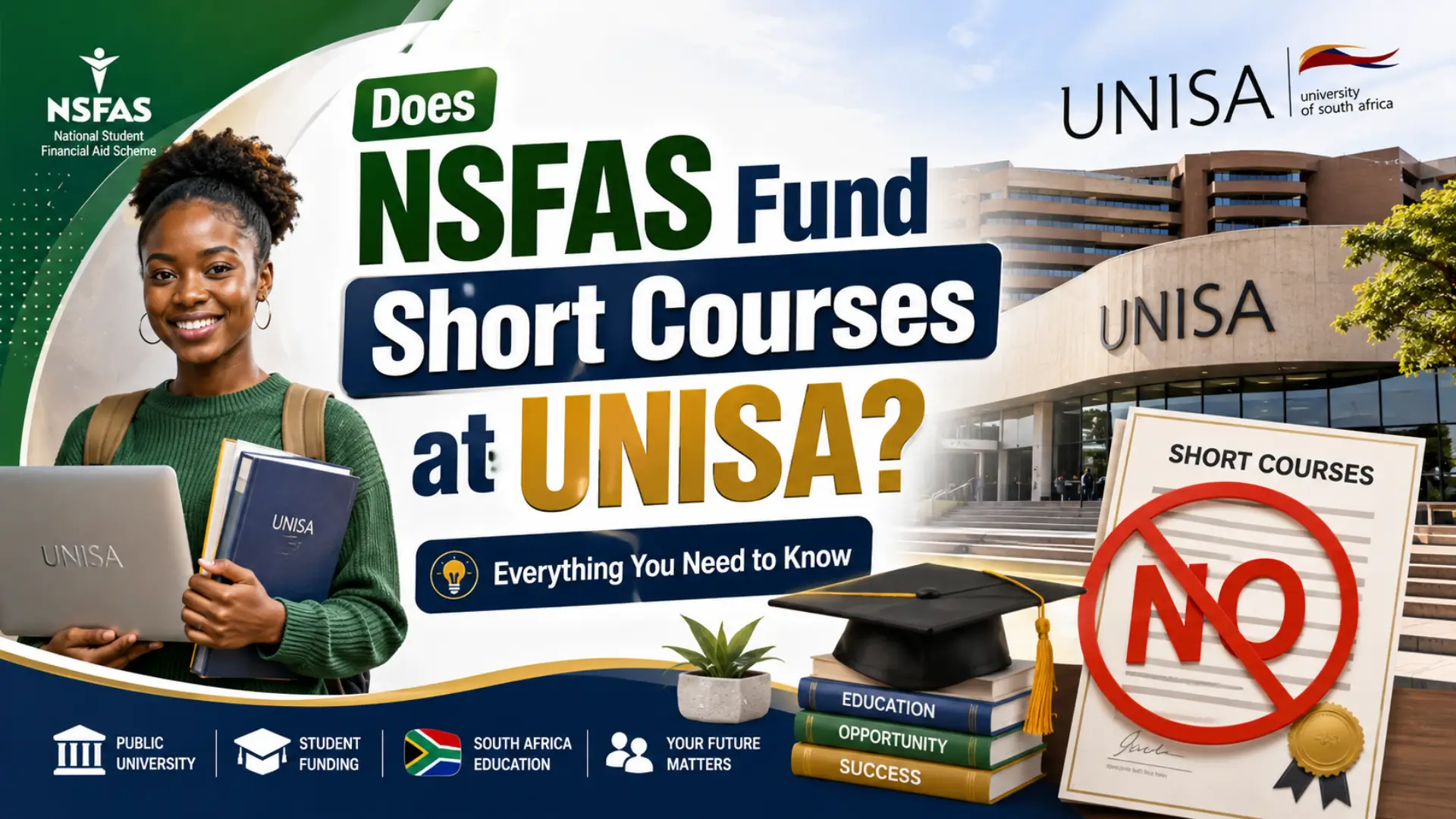
Many students choose the University of South Africa (UNISA) because it offers flexible learning options for people who want to study while working or managing family responsibilities. One of the most common questions students ask is, does NSFAS fund short courses at UNISA? This is especially important for people who want affordable education but are unsure whether financial aid covers their chosen program.
No, NSFAS does not fund short courses at UNISA. The National Student Financial Aid Scheme only funds approved undergraduate qualifications offered at public universities and TVET colleges. These include Higher Certificates, Diplomas, and Bachelor’s Degrees that meet NSFAS funding requirements. If you are planning to enroll in a UNISA short course, you will usually need to pay the course fees yourself. This guide explains why short courses are excluded, which UNISA qualifications qualify for funding, and what alternatives are available.
Does NSFAS Fund Short Courses at UNISA?
If you have searched online for does NSFAS fund short courses at UNISA, you may have found conflicting information. However, the official funding policy is straightforward. No, NSFAS does not fund short courses at UNISA. The National Student Financial Aid Scheme only covers full undergraduate qualifications such as Higher Certificates, Diplomas, and Degrees.
The main purpose of NSFAS is to help financially disadvantaged students complete recognized qualifications that lead to long-term career opportunities. Since short courses are designed to provide skills training instead of full academic qualifications, they do not fall under the categories approved for NSFAS funding.
Although this may seem disappointing, many students still choose UNISA short courses because they are often affordable, flexible, and useful for career development. These courses can improve workplace skills, prepare students for promotions, or provide specialized knowledge in a short period.
Why NSFAS Does Not Cover UNISA Short Courses
NSFAS follows strict funding guidelines established by the South African government. These guidelines limit funding to accredited undergraduate qualifications that meet national education objectives. Short learning programmes are considered additional skills development rather than formal qualifications.
Another reason is that short courses usually have much lower tuition costs and shorter study periods than full degree programs. Many are completed within a few weeks or months, making them different from qualifications that require several years of study. Because of this difference, NSFAS prioritizes students studying toward complete academic qualifications.
If your goal is to receive NSFAS funding, it is usually better to apply for a Higher Certificate, Diploma, or Bachelor’s Degree offered by UNISA instead of a short course.
Read Also: Does NSFAS Fund Bridging Courses?
Which UNISA Qualifications Does NSFAS Fund?
While short courses are excluded, many undergraduate qualifications at UNISA qualify for NSFAS funding if you meet all eligibility requirements.
Examples include:
- Higher Certificate programmes
- Diploma programmes
- Advanced Diploma programmes (where applicable)
- Bachelor’s Degree programmes
Funding approval also depends on your household income, academic eligibility, citizenship requirements, and registration status. Meeting these requirements does not automatically guarantee funding, but they are necessary before NSFAS considers your application.
Students should always confirm that their chosen qualification appears on the list of NSFAS-funded programmes before registering.
List of Short Courses at UNISA
The List of Short courses at Unisa covers many industries and professional fields. These programmes are designed for students who want practical knowledge without enrolling in a full qualification.
Popular areas include:
- Business and Management
- Human Resources
- Accounting
- Project Management
- Marketing
- Computer Skills
- Law
- Agriculture
- Health Studies
- Community Development
- Education
- Public Administration
Most of these courses focus on workplace skills rather than academic degrees. Course duration, admission requirements, and fees vary depending on the programme.
Unisa Short Courses in Teaching
Many educators choose Unisa Short courses in teaching to improve their classroom skills or gain knowledge in specialized education areas. These programmes are popular among teachers who want professional development without committing to another degree.
Teaching short courses often focus on classroom management, inclusive education, educational leadership, curriculum planning, learner support, and digital teaching methods. Since they are designed for professional development, they usually do not qualify for NSFAS funding.
Students should remember that completing a teaching short course does not automatically qualify them for teacher registration if a formal teaching qualification is required.
Unisa Short Courses in Teaching Grade R
There is also strong interest in Unisa Short courses in teaching Grade R because early childhood education continues to grow across South Africa. These programmes are designed for people working with young children or those wanting to improve their understanding of early learning.
Grade R short courses may include topics such as child development, classroom activities, literacy instruction, numeracy foundations, and learning through play. While these courses provide valuable practical knowledge, they remain short learning programmes and therefore are not funded by NSFAS.
Students planning a long-term teaching career should also consider formal teaching qualifications that may qualify for NSFAS assistance.
6 Months Courses at UNISA
Many students specifically search for 6 months courses at Unisa because they want to gain skills quickly without spending several years studying. These shorter programmes are available in different fields depending on the academic calendar and department offerings.
Although six-month courses are convenient for working professionals, they still fall under short learning programmes. As a result, they are generally excluded from NSFAS funding. Students enrolling in these programmes should prepare to pay tuition and other related costs themselves.
Before applying, review the course duration, entry requirements, and total fees so you understand the full financial commitment.
Read Also: List of TVET Colleges Funded by NSFAS
How Much Do UNISA Students Get From NSFAS Per Month?
The exact amount depends on several factors, including your qualification, study mode, and approved allowances for the academic year. Students receiving NSFAS funding may qualify for allowances covering learning materials, accommodation where applicable, transport, and personal care.
For many students, the monthly living allowance generally falls between R1,560 and R1,650, although actual payments depend on NSFAS policies and the approved allowance structure for that year. Not every funded student receives every allowance, so your personal funding package may differ from another student’s.
Unisa Short Courses Fees PDF
Students often look for the Unisa Short courses fees PDF before choosing a programme. This document usually provides the latest tuition costs, registration fees, and payment information for available short learning programmes.
Since fees can change each academic year, always download the newest fee schedule before submitting your application. Checking the official fee document helps you compare programmes, prepare your budget, and avoid unexpected expenses during registration.
Remember that because NSFAS does not fund short courses, these published fees are normally paid directly by the student.
Unisa Short Courses 2026 Application
The Unisa Short courses 2026 application process normally opens during specific application periods announced by the university. Application dates may differ from those used for degree programmes, so students should monitor official announcements carefully.
Applicants usually need to complete an online application, submit the required documents, and pay any applicable fees before the deadline. Because spaces in some programmes may be limited, applying early can improve your chances of securing a place.
Always read the admission requirements for your chosen course before beginning the application process.
Apply for Short Courses at UNISA
If you want to Apply for Short courses at Unisa, the process is generally simple but requires careful attention to detail.
Follow these basic steps:
- Choose the short course that matches your career goals.
- Check the admission requirements.
- Complete the online application.
- Upload the required supporting documents.
- Pay the required fees before the deadline.
- Wait for confirmation from UNISA.
Before submitting your application, double-check every detail to avoid delays caused by missing documents or incorrect information.
Common Mistakes Students Make
Many applicants misunderstand how NSFAS funding works, which can lead to disappointment during registration.
Some of the most common mistakes include:
- Assuming every UNISA programme qualifies for NSFAS funding.
- Registering for a short course expecting financial assistance.
- Not checking whether the programme is a full qualification.
- Ignoring official NSFAS eligibility requirements.
- Waiting until the last minute to apply.
- Using outdated fee schedules or application dates.
Taking a few minutes to verify funding eligibility before registering can save both time and money.
Frequently Asked Questions (FAQs)
Conclusion
If you were wondering does NSFAS fund short courses at UNISA, the answer is clear. NSFAS only funds approved undergraduate qualifications such as Higher Certificates, Diplomas, and Degrees, not short learning programmes. Before applying, confirm that your chosen UNISA qualification qualifies for funding so you can plan your studies and finances with confidence.