NSFAS Allowance 2026: Full Payment Dates & Schedule

If you’re a NSFAS-funded student, understanding your allowance schedule isn’t just helpful it’s essential for planning your academic year. Late rent payments, running out of data before exams, or being caught without transport money can all be avoided with the right information at the right time.
As someone who has guided thousands of students through the NSFAS system over the years, I’ve seen firsthand how confusion around payment dates causes unnecessary stress. This guide breaks down everything you need to know about your NSFAS allowance for 2026 from exact payment cycles to what happens if your payment is delayed.
What Is the NSFAS Allowance?
The National Student Financial Aid Scheme (NSFAS) doesn’t just cover your tuition fees. It also provides living allowances designed to support your day-to-day needs as a student. These typically include:
- Accommodation allowance
- Meal (food) allowance
- Transport allowance
- Personal care allowance
- Book allowance
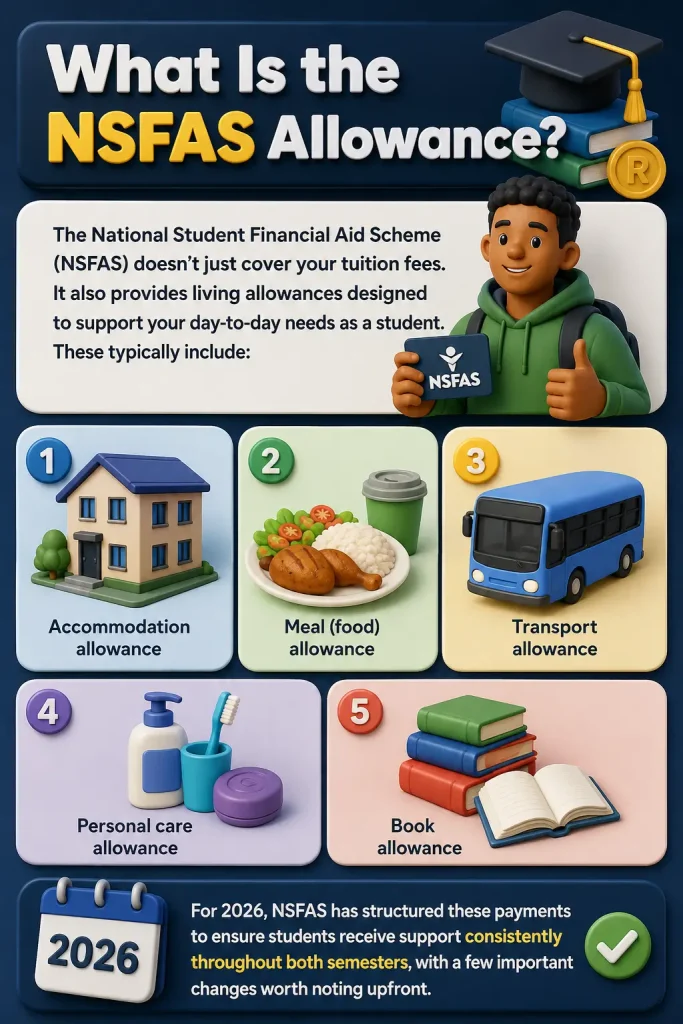
For 2026, NSFAS has structured these payments to ensure students receive support consistently throughout both semesters, with a few important changes worth noting upfront.
NSFAS Allowance 2026: Upfront Payment Structure
One of the most important updates for the 2026 academic year is how the first payment works. Starting 1 February 2026, NSFAS will disburse an upfront payment that includes:
- The full book allowance for the year
- The first month of your meal, accommodation, personal care, and travel allowances
This means your very first payment will be larger than your usual monthly cycle amount, since it’s covering multiple allowance categories at once. If you’re a first-time NSFAS recipient, don’t be alarmed by the size of this payment it’s designed to help you settle in for the semester before smaller, regular payments begin. If you don’t know how much NSFAS pays each month, visit our NSFAS Pay Per Month page to find out the latest monthly payment amounts.
NSFAS Payment Dates for 2026 (Full Schedule)
NSFAS pays allowances in cycles across the academic year. Below is the complete breakdown for all campuses in 2026.
First Semester Payment Dates
| Cycle | Date |
|---|---|
| Cycle 1 | Thursday, 11 February 2026 |
| Cycle 2 | Monday, 02 March 2026 |
| Cycle 3 | Tuesday, 07 April 2026 |
| Cycle 4 | Monday, 04 May 2026 |
| Cycle 5 | Monday, 01 June 2026 |
Second Semester Payment Dates
| Cycle | Date |
|---|---|
| Cycle 6 | Monday, 06 July 2026 |
| Cycle 7 | Monday, 03 August 2026 |
| Cycle 8 | Monday, 31 August 2026 |
| Cycle 9 | Monday, 05 October 2026 |
| Cycle 10 (Final payment) | Monday, 02 November 2026 |
Tip from experience: Mark these dates in your phone calendar with a reminder a day before. Banking delays can occasionally push payments back by a day or two, so don’t panic if funds don’t reflect exactly at midnight on the scheduled date.
Payment Timing by Institution Type
Not all institutions follow the exact same internal payment rhythm. Here’s how it typically breaks down:
University Students
Universities generally receive allowance payments around the 30th of each month, though the exact date can shift slightly depending on your specific institution’s processing cycle.
TVET College Students
If you’re studying at a TVET college, your allowance structure works a little differently:
- Payments are disbursed on the 25th of each month
- Colleges also receive an upfront 20% tuition advance to help manage early-semester costs
UNISA Students
Since UNISA operates as a distance-learning institution, its payment cycle is also distinct:
- Allowances are paid out on the 29th of each month
Why this matters: If you’re comparing your payment date to a friend at a different institution and they don’t match, this is usually why. It’s not an error it’s simply how your specific institution’s disbursement cycle is structured.
How to Check Your NSFAS Allowance Status?
Given the different payment structures across institutions, I always advise students to verify their own status directly rather than relying solely on general dates. Here’s how:
- Log into your NSFAS myNSFAS portal using your credentials
- Check your funding status and allowance breakdown
- Review your NSFAS statement for a full history of disbursements
- For institution-specific queries (like UKZN or other universities), visit your university’s financial aid office page, as they often post updated internal payment schedules
If your portal shows a payment as “processed” but you haven’t received the funds within 3-5 working days, contact your institution’s financial aid office directly this is usually faster than waiting on general NSFAS query channels.
Read Also: NSFAS Status Check Online
Will NSFAS Increase Allowances in 2026?
This is one of the most common questions I receive each year, and it’s a fair one given rising living costs.
As of now, there has been no confirmed blanket increase announced specifically for the 2026 allowance amounts beyond the standard disbursement structure. Students should:
- Monitor official NSFAS communications and their student portal for updates
- Check their university’s financial aid office for any institution-specific adjustments
- Avoid relying on unofficial social media posts, which often spread inaccurate figures
My advice: Always verify allowance amount changes through your official NSFAS portal or your institution directly not through WhatsApp forwards or unverified Facebook groups, which unfortunately spread a lot of misinformation every year.
NSFAS Allowance Deadlines
While NSFAS payments follow the cycle dates above, there are other deadlines students often overlook:
- Registration deadlines: At your institution (missing this can delay your funding entirely)
- Bank account verification deadlines: If your bank details aren’t confirmed, your payment won’t go through even if the cycle date has passed
- Appeal submission deadlines: If your funding application was initially declined
Missing these administrative deadlines is one of the most common reasons students experience payment delays not actual NSFAS processing errors.
Frequently Asked Questions (FAQ)
Conclusion
NSFAS allowance management in 2026 comes down to knowing your payment cycles and staying proactive. Confirm your bank details, track each disbursement date, and check your myNSFAS portal regularly. Doing this ensures uninterrupted support throughout the year, letting you focus on what matters most your studies.