NSFAS Bursary 2026: Who Qualifies, What It Covers & Conditions

If you are a South African student struggling to afford university or college, the National Student Financial Aid Scheme (NSFAS) could be the answer. This government-funded bursary helps thousands of students every year cover tuition, accommodation, and daily living costs. Here is everything you need to know about how it works, who qualifies, and what you can expect as a funded student.
What Is an NSFAS Bursary?
The NSFAS bursary is financial support provided by the South African government to students who cannot afford higher education. Unlike a loan, you do not have to pay this money back if you meet the academic requirements. It covers full tuition and registration fees at public universities and TVET colleges, plus allowances for accommodation, meals, transport, and learning materials.
An NSFAS bursary holder is simply a student who receives this government support to study at a public university or Technical and Vocational Education and Training (TVET) college. Once approved, you become part of a national program that exists to remove financial barriers and help you earn your first qualification.
Who Qualifies for an NSFAS Bursary?
Not everyone can apply. NSFAS has strict rules about who gets funding. Here are the requirements you must meet:
Citizenship and Residency
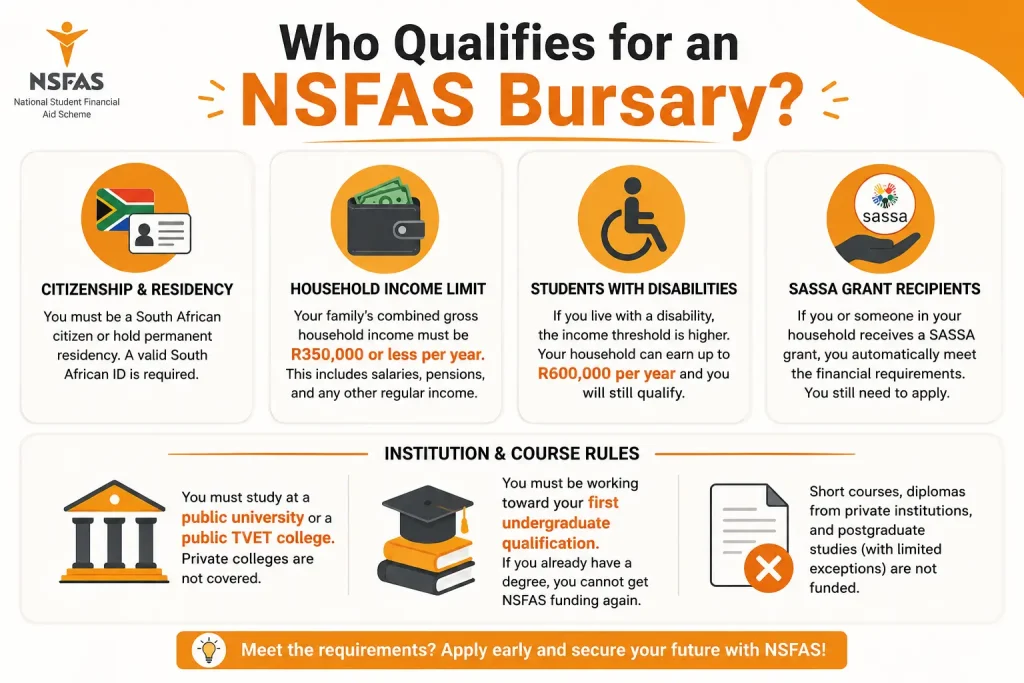
You must be a South African citizen or hold permanent residency. A valid South African ID is required when you apply.
Household Income Limit
Your family’s combined gross household income must be R350,000 or less per year. This includes salaries, pensions, and any other regular income coming into the home.
Students with Disabilities
If you live with a disability, the income threshold is higher. Your household can earn up to R600,000 per year and you will still qualify.
SASSA Grant Recipients
If you or someone in your household receives a SASSA grant, you automatically meet the financial eligibility requirements. You still need to apply, but the income check is waived.
Institution and Course Rules
- You must study at a public university or a public TVET college. Private colleges are not covered.
- You must be working toward your first undergraduate qualification. If you already have a degree, you cannot get NSFAS funding again.
- Short courses, diplomas from private institutions, and postgraduate studies (with limited exceptions) are not funded.
What Does the NSFAS Bursary Cover?
The NSFAS bursary value is significant. It is not just a small handout — it is designed to cover the full cost of studying.
Tuition and Registration Fees
NSFAS pays your tuition and registration fees directly to your institution. You do not handle this money yourself.
Accommodation Allowance
If you live in university or college residence, NSFAS pays your accommodation costs up to a capped amount set by the institution.
Living and Transport Allowances
As a standard student, you receive a monthly cash allowance ranging from roughly R1,650 to R2,740 per month. This is paid over 10 academic months, usually from February to November. The exact amount depends on your institution and whether you live on campus or travel from home.
Learning Materials
You also get an allowance for books, laptops, and other study materials needed for your course.
This monthly cash allowance is completely separate from your tuition fees. It is meant to help with food, transport, and personal expenses while you focus on your studies.
NSFAS Bursary Agreement
Before you receive any money, you must sign the NSFAS bursary agreement. This is a legal contract between you and NSFAS. It outlines what you must do to keep your funding and what happens if you break the rules.
By signing, you agree to:
- Attend all your classes
- Pass your modules
- Follow your institution’s code of conduct
- Use the funding only for its intended purpose
Read this agreement carefully. It is binding, and failing to follow it can result in your funding being withdrawn.
How to Get Your NSFAS Bursary Letter
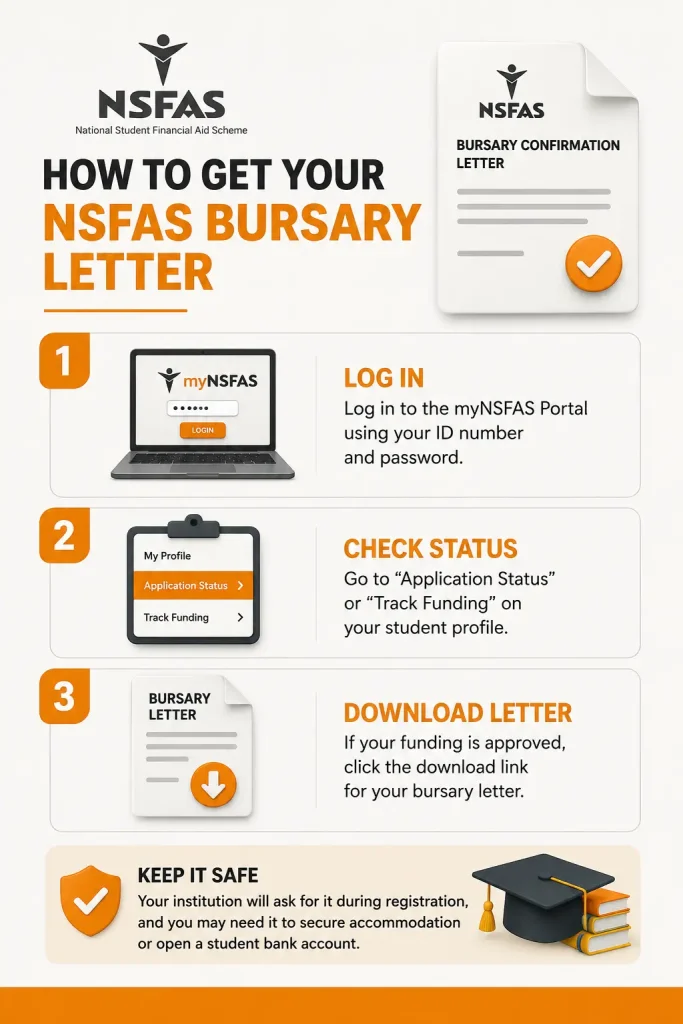
Once your application is approved, you need proof of funding. This comes in the form of a bursary confirmation letter or eligibility letter. Here is how to download it:
- Log in to the myNSFAS Portal using your ID number and password.
- Go to “Application Status” or “Track Funding” on your student profile.
- If your funding is approved, click the download link for your bursary letter.
Keep this letter safe. Your institution will ask for it during registration, and you may need it to secure accommodation or open a student bank account.
NSFAS Bursary Conditions You Must Follow
Funding is not automatic forever. The NSFAS bursary conditions require you to meet specific academic, financial, and behavioral guidelines to keep your support.
Academic Performance
You must pass your modules. NSFAS tracks your results every semester. If you fail too many subjects or drop out without a valid reason, your funding stops.
Full-Time Study
NSFAS funds full-time students. If you switch to part-time study, you may lose your bursary.
No Double Funding
You cannot receive NSFAS and another full bursary at the same time. If another organization pays your fees, NSFAS will not cover you.
Good Conduct
You must behave in a way that does not bring your institution or NSFAS into disrepute. Serious disciplinary issues can lead to funding cancellation.
Annual Reapplication
In some cases, you need to reapply or confirm your details each year. Check the myNSFAS portal regularly to make sure your information is up to date.
Conclusion
The NSFAS bursary is one of the most important tools available to South African students who want to study but cannot afford it. If your household earns R350,000 or less per year, you are a citizen or permanent resident, and you plan to study at a public university or TVET college, you should apply.
Make sure you understand the requirements, sign your agreement, and keep up with your academic work. The monthly allowance, tuition coverage, and material support can change your life — but only if you take the rules seriously and stay committed to your studies.