Does Richfield College Accept NSFAS?

Choosing the right college is only one part of planning your future. The bigger question for many South African students is how they will pay for their studies. One of the most common questions asked online is, Does Richfield College Accept NSFAS? If you are considering studying at Richfield, understanding your funding options before applying can save you time and disappointment.
Does Richfield College Accept NSFAS?
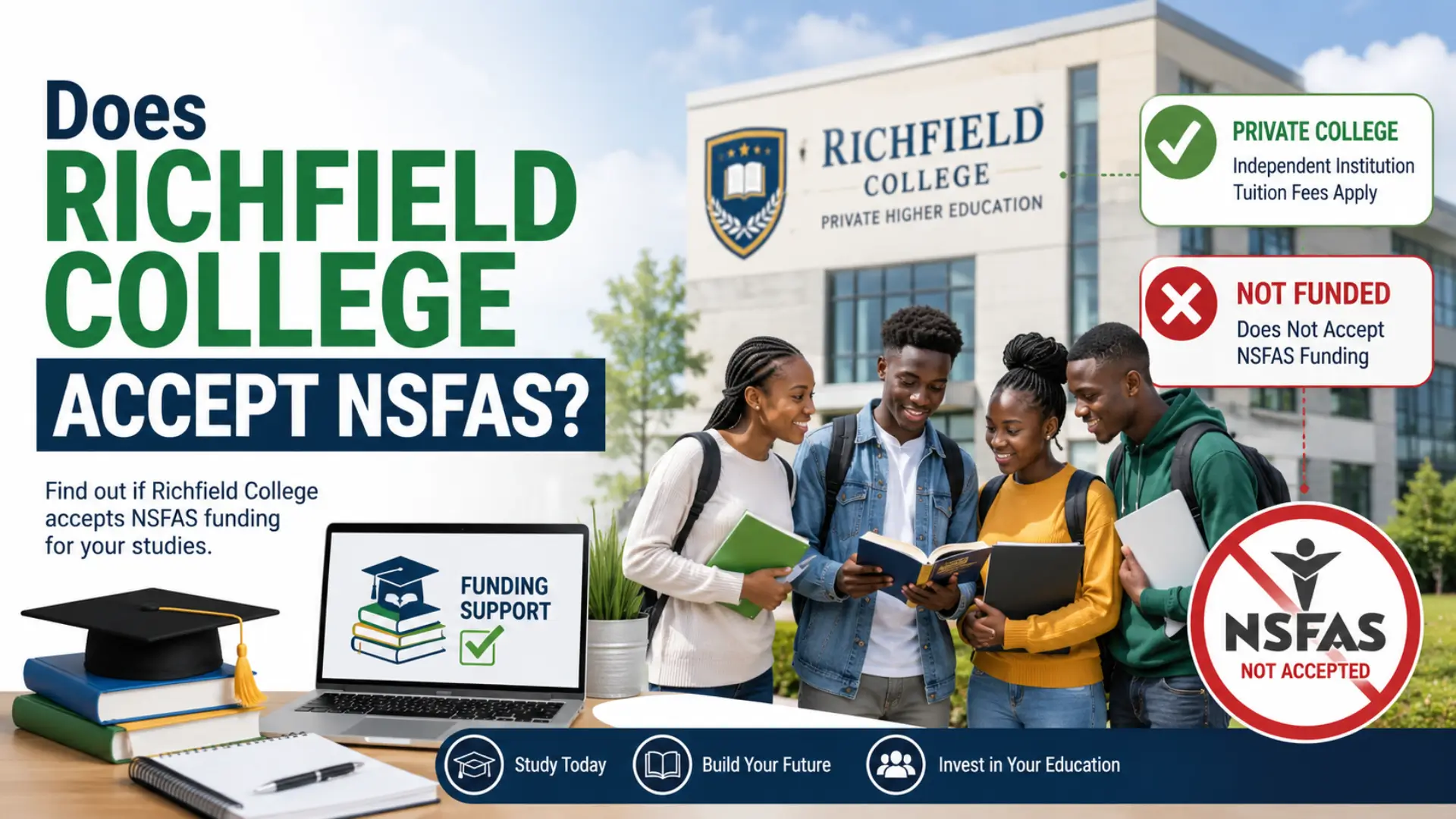
No, Richfield College does not accept NSFAS because it is a private higher education institution. NSFAS only provides funding to eligible students studying at South Africa’s public universities and TVET colleges. However, this does not mean you have no financial support available. Richfield offers its own bursary opportunities, while students can also explore private scholarships and student loans. This guide explains everything you need to know about Richfield College funding, courses, fees, and alternative financial assistance.
Does Richfield College Accept NSFAS?
If you have been searching does richfield college accept nsfas, the answer is straightforward. Richfield College does not accept NSFAS funding. Since Richfield is registered as a private higher education institution, it falls outside the list of institutions supported by the National Student Financial Aid Scheme (NSFAS).
Many students assume every accredited college qualifies for NSFAS funding, but that is not how the scheme works. NSFAS was created to support financially disadvantaged students studying at public universities and TVET colleges. Because Richfield operates independently as a private institution, students must rely on alternative funding sources instead of NSFAS.
Read Also: Is MANCOSA Funded by NSFAS?
Why NSFAS Does Not Fund Richfield College
The reason is based on government funding policy rather than the quality of education. NSFAS funding is reserved exclusively for students attending public higher education institutions approved by the Department of Higher Education and Training.
Richfield College is fully accredited and offers recognized qualifications, but its private status means it is responsible for its own funding model. Students pay tuition directly or secure financial support through bursaries, scholarships, employer sponsorships, or student loans. This distinction often confuses applicants because accreditation and NSFAS eligibility are two completely different things.
Bursaries That Fund Richfield College
Although NSFAS is unavailable, there are still several ways to finance your studies. Bursaries that fund Richfield College include both internal and external opportunities designed to help deserving students reduce their education costs.
Richfield Education regularly provides internal tuition-only bursaries based on academic performance, financial need, or promotional campaigns. One well-known example is the Expresso x Richfield Bursary, which has offered funding worth up to R200,000 for selected students. Since these opportunities may change each year, applicants should always check the latest announcements before applying.
Besides Richfield’s own bursaries, students may also consider:
- Internal Richfield tuition bursaries
- Corporate bursary programmes
- Employer sponsorships
- Bank student loans
- Private education funding organisations
Exploring multiple funding options increases your chances of covering tuition and study-related expenses.
Richfield College Courses and Fees 2027
Students researching Richfield College courses and fees 2027 will find a wide range of career-focused qualifications in technology, business, management, and public administration. The institution is known for offering flexible learning through both contact and distance education.
Annual tuition fees for the 2027 academic year generally range from R30,000 to R55,000, depending on the programme and study method. Richfield also offers upfront payment discounts for eligible students. In addition to tuition, applicants should budget for a non-refundable application fee of R800 and the required registration deposit.
Information Technology Programmes
Technology remains one of Richfield’s strongest academic areas. Students interested in software development, networking, cybersecurity, or information systems can choose from Higher Certificates, Diplomas, and Degree programmes.
Estimated first-year tuition for new students includes:
- BSc in Information Technology: R45,200–R47,900 (Contact Learning)
- BSc in Information Technology: R37,200–R39,900 (Distance Learning)
- Diploma in Information Technology: R38,200–R40,900 (Contact Learning)
- Diploma in Information Technology: R31,200–R33,900 (Distance Learning)
- Higher Certificate in IT: R30,200–R32,900 (Contact Learning)
Business and Management Programmes
Richfield also offers qualifications in Business Administration, Commerce, Public Management, and related fields. These programmes prepare students for careers in finance, management, entrepreneurship, and government services.
Typical tuition fees for Business and Management Sciences range from approximately R27,200 to R45,900, depending on whether you enrol for a certificate, diploma, or degree programme. Fees may vary slightly between campuses and academic years, so applicants should always confirm the latest schedule before registration.
Richfield College Fees Per Month
Many prospective students prefer monthly payment plans rather than paying the full annual tuition upfront. Richfield College monthly fees generally range between R2,836 and R6,600, depending on your qualification, study mode, and payment arrangement.
Monthly instalments make education more affordable for many families by spreading tuition costs throughout the academic year. However, students should remember that registration fees, application fees, textbooks, internet access, and other learning materials may not always be included in these monthly payments. Preparing a realistic budget before enrolling can help prevent financial stress later in the year.
Richfield Bursary Application for 2027
Students interested in financial assistance should apply as early as possible because funding opportunities are often limited. Richfield bursary application for 2027 is already underway alongside admissions for the new academic year.
Applicants can submit both their admission and bursary applications through the Richfield Application Portal. Supporting documents usually include your identity document, academic results, proof of income where required, and any additional documents requested by the institution. Applying early gives you more time to correct missing information and improves your chances of securing available funding before spaces fill up.
Where Is Richfield College Located?
If you are wondering, Where Is Richfield College located, the institution has campuses across several major South African cities. This allows students from different provinces to access quality higher education without relocating too far from home.
Richfield campuses are located in areas such as Johannesburg, Durban, Pretoria, Cape Town, Polokwane, Mbombela, Bloemfontein, Port Elizabeth (Gqeberha), East London, and several other regional centres. Distance learning options are also available, giving students the flexibility to study from almost anywhere in South Africa while balancing work and family responsibilities.
Read Also: Does NSFAS Pay for Boston College?
Common Mistakes Students Make
Many students lose valuable time because they misunderstand how higher education funding works. Avoiding these common mistakes can help you make better decisions before applying.
- Assuming every accredited college qualifies for NSFAS funding.
- Applying for NSFAS after choosing a private institution.
- Waiting until registration to look for bursaries.
- Ignoring private scholarships and student loan opportunities.
- Not budgeting for registration deposits, application fees, and study materials.
Researching funding requirements before submitting your application can prevent unnecessary delays and financial surprises.
Frequently Asked Questions (FAQs)
Conclusion
If you were asking, Does Richfield College Accept NSFAS?, the answer is no. Because Richfield is a private institution, NSFAS funding is not available. Fortunately, students still have several alternatives, including Richfield bursaries, private scholarships, employer sponsorships, and student loans, making it possible to pursue higher education with careful financial planning.